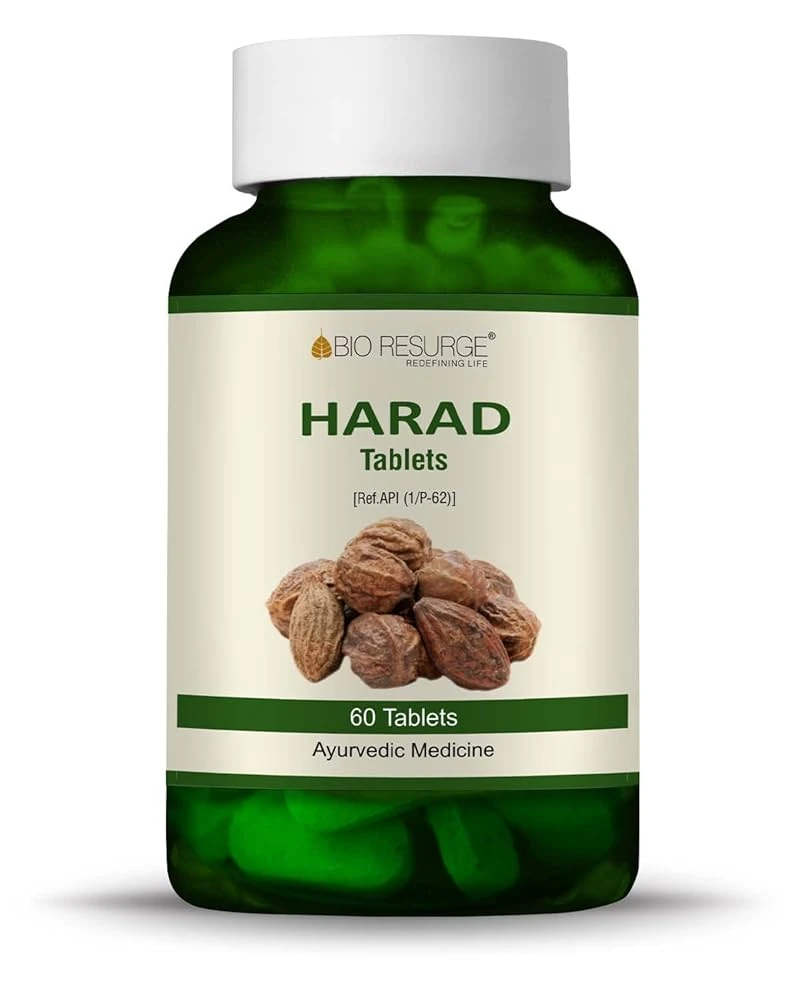
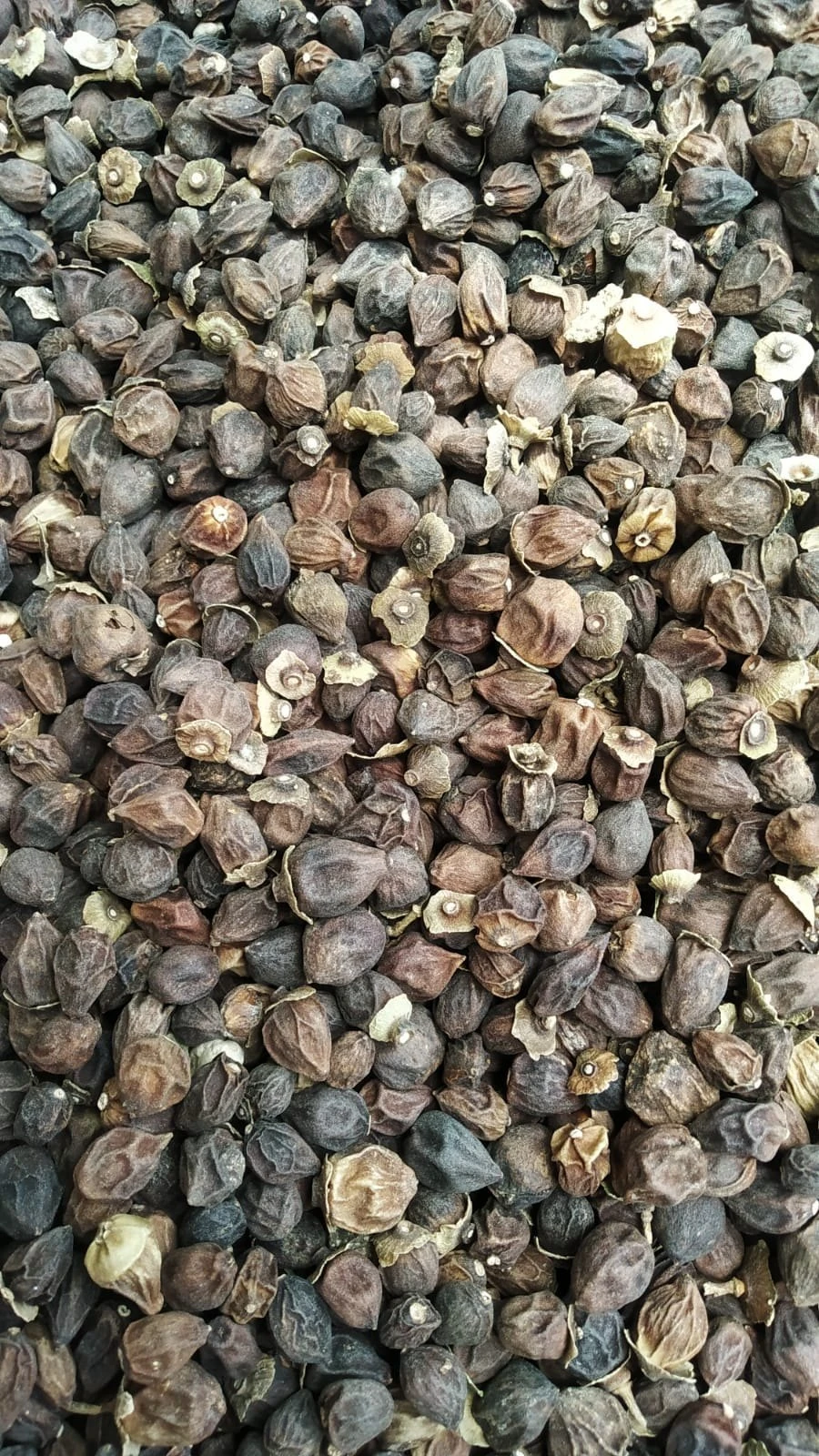
Harad, scientifically known as Terminalia chebula, is an ayurvedic herb belonging to the Combretaceae family. Because of its extraordinary health benefits, it is also called the King of Medicine1. The harad plant is found in the Middle East and tropical countries such as China, India, and Thailand2. It is a tropical, large, evergreen tree with thick, black and cracked bark. Its seeds can be eaten as snacks. Fruits of harad are yellow to orange-brown2. It is also used as one of the ingredients of the popular ayurvedic formulation Triphala, which is traditionally used for treating various stomach disorders3.
Other names of Harad include Harre, Harad, Harar in Hindi; Myrobalan in English; Abhaya, Kayastha, Shiva, Pathya, Vijaya in Sanskrit; Shilikha in Assamese; Haritaki in Bengali; Hirdo, Himaja, Pulo-harda in Gujrati; Alalekai in Kannada; Halela in Kashmiri; Katukka in Malayalam; Hirda, Haritaki, Harda, Hireda in Marathi; Harida in Oriya; Halela, Harar in Punjabi; Kadukkai in Tamil; Karaka, Karakkaya in Telugu; Halela in Urdu4.
Nutritional Benefits and Chemical Composition of Harad
Harad contains many chemical components with antioxidant benefits, such as phenolic acids, benzoic acids, cinnamic acids, flavonoids, beta-sitosterol (a plant sterol used to reduce cholesterol levels) and glycosides. Nutritional components like amino acids, fatty acids, and fructose are also found in harad
Potential Uses of Harad for Overall Health
In traditional systems of medicine, the fruits of Harad, have been extensively used in Ayurveda, Unani and Homeopathic systems of Medicine2. With various phytochemicals like polyphenols, flavonoids, anthocyanins, alkaloids, terpenes and glycosides, harad provides may show potential uses against many diseases condtions5.
1. Potential Uses of Harad as an Antioxidant
The fruits, leaves, and bark of harad exhibit potent antioxidant properties due to their phenolic compounds. Harad extract may disrupt free radicals (which cause damage to body proteins and DNA) and inhibit oxidising enzymes in the body. This may help lower inflammation in the body5.
2. Potential Uses of Harad in Cancer
The phenolic compounds present in harad suggest good anti-cancer activity in laboratory trials. Harad fruit extract may have the potential to inhibit the growth or increase in the number of cancer cells and induce death in several types of cancer cells, including human breast cancer cells, human bone cancer cells, and prostate cancer cells, as seen in lab-scale studies6. However, more studies are required to support the use of harad in cancer. You are advised not to use any herb without consulting your doctor first.
3. Potential Uses of Harad in Diabetes
Harad fruit has shown anti-diabetic properties in several lab trials. In addition, long-term and short-term animal studies7 may have shown that it can lower blood glucose levels in diabetic rats. With larger human trials, we might be able to establish the use of harad even in humans to avoid or manage diabetes. Diabetes is a serious health condition that requires you to adhere to doctor’s advice and treatment. Avoid using any herb or remedy without consulting your healthcare provider.
4. Potential Uses of Harad in Liver
Animal studies8 have shown that harad fruits may have significant liver-protective properties and could potentially prevent liver cell toxicity. In addition, it may help avoid drug-induced liver cell toxicity. However, if you suffer from liver problems, you are advised not to use any herb or remedy without talking to your healthcare provider.
5. Potential Uses of Harad for Infections
- Potential Uses of Harad for Bacterial Infections
Harad may exhibit anti-bacterial activity against many infectious bacteria like Clostridium perfingens and Escherichia coli. It might also be effective against Helicobacter pylori, which causes stomach ulcers, gastritis (gastric inflammation), and stomach cancer. In addition, Harad seeds may negatively affect the growth of bacteria like Staphylococcus aureus, Shigella, and Klebsiella, which cause digestive tract infections9. With larger human trials, we will be able to understand the true extent of the effects of harad on humans.
- Potential Uses of Harad for Viral Infections
Harad may show anti-viral activity. It may provide protection against the influenza A virus, helping recover from upper respiratory tract infections quickly. It could inhibit the enzymes needed for viral growth during a lab trial. It may also show therapeutic activity against the herpes simplex virus and hinder the development of the human cytomegalovirus5.
- Potential Uses of Harad for Fungal Infections
Harad extract has shown good antifungal activity in lab studies5 against several yeasts and dermatophytes. These fungi cause skin infections. In addition, Harad extract showed antifungal activity against pathogenic fungi like Candida albicans, Epidermophyton, Floccosum, Microsporum gypseum and Trichophyton rubrum.
However, more studies are required to support the use of harad in human infections. Therefore, avoid using harad or any other herb for infections without a doctor’s consultation.
6. Potential Uses of Harad for Inflammation
Dried fruit extract of harad showed anti-inflammatory properties in lab trials. It could stop the formation of nitric oxide, a chemical in the blood responsible for inflammation. In addition, Chebulagic acid, a component of harad seeds, may reduce the onset and progression of arthritis (inflammation of the joints) in animal studies5. However, avoid using harad to reduce inflammation without talking to your doctor first.
7. Potential Uses of Harad for Heart
In an animal study5, harad extract could reduce the lipid and cholesterol levels in the blood. This activity may help manage atherosclerosis (deposition of fatty material on the walls of blood vessels). Harad fruit pericarp also showed cardioprotective (heart protective) properties. In addition, animal studies5 have shown that harad extract may help avoid heart problems. If you are suffering from any heart condition, you must consult your doctor and get treated. Do not use harad or herbal remedies to prevent or treat heart problems on your own.
8. Potential Uses of Harad for Stomach
The benefits of harad as a laxative are well established in the literature. Laxative properties may help manage constipation. Harad may help evacuate the bowel completely. Harad fruit might lengthen the gastric emptying time. This effect appeared to be balanced by an improvement in the secretion of stomach glands, protecting the stomach from duodenal ulcers5. However, stomach problems may indicate a serious stomach problem. Therefore, you must consult your healthcare provider before using harad for stomach problems.
Other Potential Uses of Harad
- It may help with conditions like ophthalmia (eye disorders), haemorrhoids (piles), bleeding gums, and mouth ulcers.
- Its water-based paste may show anti-inflammatory and analgesic properties and help heal wounds.
- A decoction made of harad fruit may be used as a gargle in cases of oral ulcers and sore throat.
- Its powder may be an effective astringent (applied to reduce bleeding) dentifrice for loose gums, bleeding, and gum ulceration5.
- Oral rinsing with harad extract could help reduce the total bacterial counts in saliva samples. This protective effect lasted 3 hours after rinsing, indicating that harad may play a role in preventing dental caries5.
Though studies show the benefits of harad in various conditions, these are insufficient, and there is a need for further studies to establish the true extent of the benefits of harad on human healtH
 english



 Ayurvedic Medicine
 Jadibuti / Pansari
 Cosmetics & Personal Care
 Homoeopathic
 Allopathic
 Patanjali
 Unani
Unani
 Veterinary
 Baby Care